



Most runners know the routine of an early Saturday morning.
Pull on your cold-weather gear. Brew some coffee. Eat something quick. Text a friend about where to meet. Head out the door.
But on one Saturday morning in November 2025, the routine looked very different.
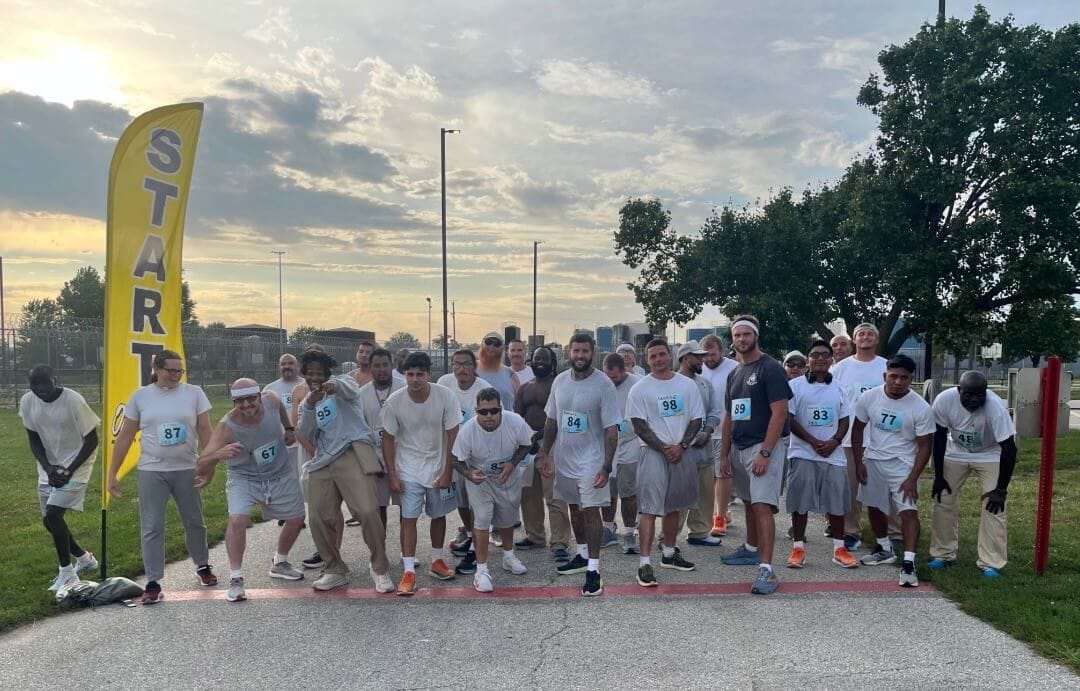
The runners arriving at the Omaha Correctional Center turned in their driver’s licenses. Watches, phones and personal belongings stayed behind. Shoes and outer clothing went through security. After passing through locked rooms and a series of security procedures, the final door opened onto the prison yard.
Waiting on the other side were men they had come to know very well.
Waiting on the other side were men they had come to know very well.
For six months, volunteers with the OCC Run Crew had spent Monday evenings running alongside men incarcerated at the Omaha Correctional Center. At first, they knew many of the runners only by their prison numbers. Over time, miles turned those numbers into names. Running together through summer heat, rain and difficult workouts created opportunities to hear stories, regrets, hopes and dreams.
Now, those months of training were about to culminate in something few of the men had ever imagined doing.
A half marathon.
Where It Started
The OCC Run Crew began in May 2025.
Blake Ziegler had spent months working with the Nebraska Department of Correctional Services to make the program possible. Bringing runners from the community inside a correctional facility required careful consideration of security, procedures and safety. But on May 5, the doors finally opened for the first gathering.
More than 60 men came into the gym that night.
Some were already excited about running. Others were skeptical. Some simply wanted a reason to leave their cells for a while.
Then the volunteers began sharing their own stories.
They talked about running, why they did it and what it had taught them. The men listened. Small groups formed. Conversations started.
And something as simple as a fist bump began to mean more.
Before long, fist bumps became a tradition. Volunteers and inmates exchanged them before runs, while passing each other on the road and again when the evening ended. What seemed like a small gesture became a reminder that someone saw them, knew their name and was willing to run beside them.
Running began to build relationships.
More Than a Pair of Shoes
One of the first challenges was obvious.
Many of the men did not have running shoes.
They had state-issued footwear that was never designed for putting in mile after mile. So the running community responded.
HOKA helped provide dozens of lightly used demo shoes. Fleet Feet and Peak Performance contributed additional pairs. Local runners donated shoes of their own.
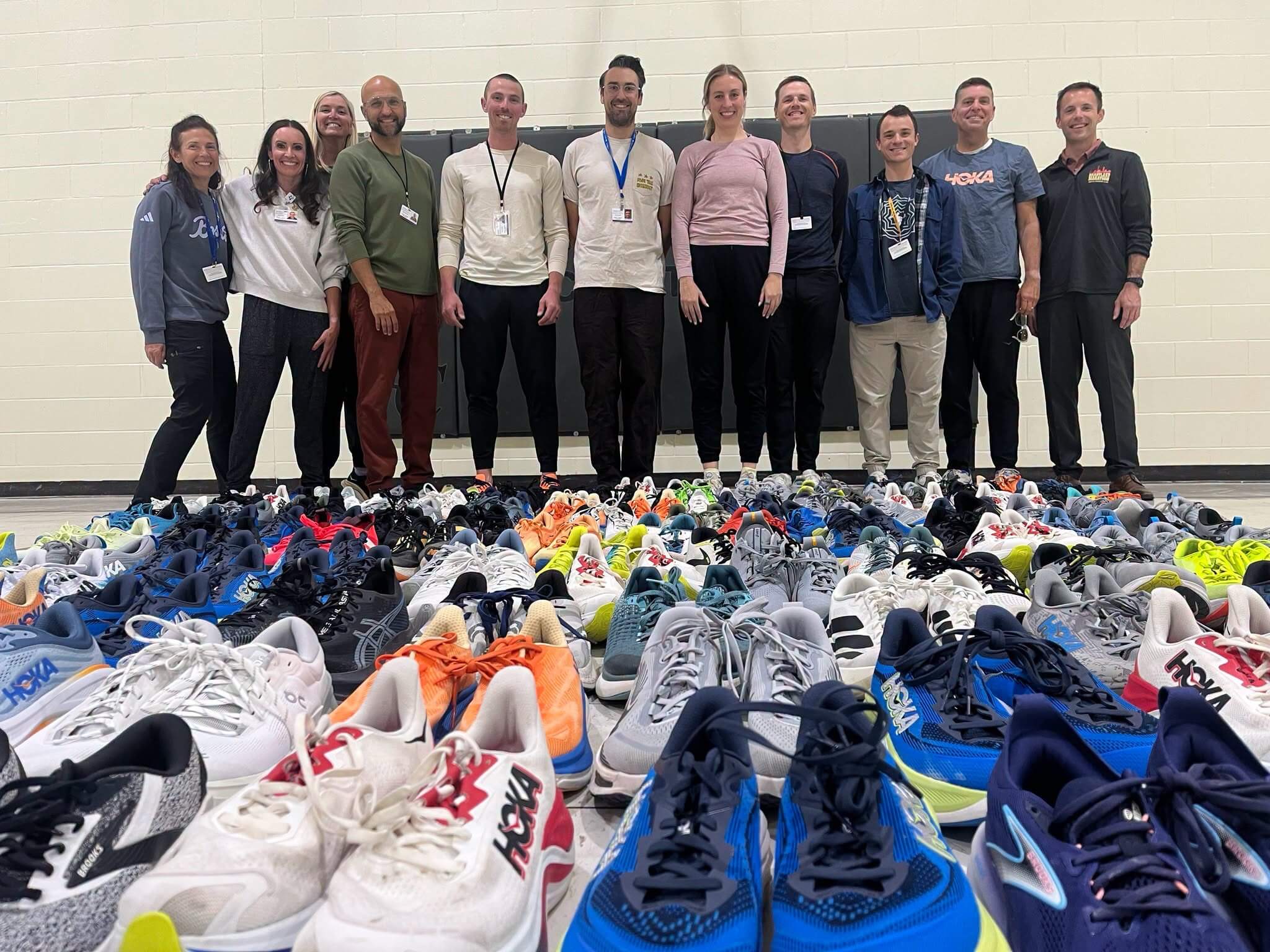
Soon, there were enough shoes to fit runners across a wide range of sizes. More than 60 nearly new pairs, valued at more than $6,000, were lined up in the OCC gym for the men to receive.
The reaction was unforgettable.
Some had never owned a real pair of running shoes. There were smiles, laughter and excitement as men tried on Brooks, ASICS, New Balance, HOKA, Nike and other brands.
But the shoes represented something bigger than footwear.
They represented the realization that people outside the prison cared enough to give something to people they had never met.
That sense of being seen became one of the foundations of OCC Run Crew.
Twenty-Six Laps
Week after week, the men trained on a short stretch of broken asphalt inside the prison.
Eventually, OCC leadership allowed the group to use a full half-mile loop for a race.
That made something possible that had once sounded almost absurd:
13.1 miles inside a correctional facility.
Twenty-six laps.
On November 8, 2025, the OCC Run Crew held its first half marathon.
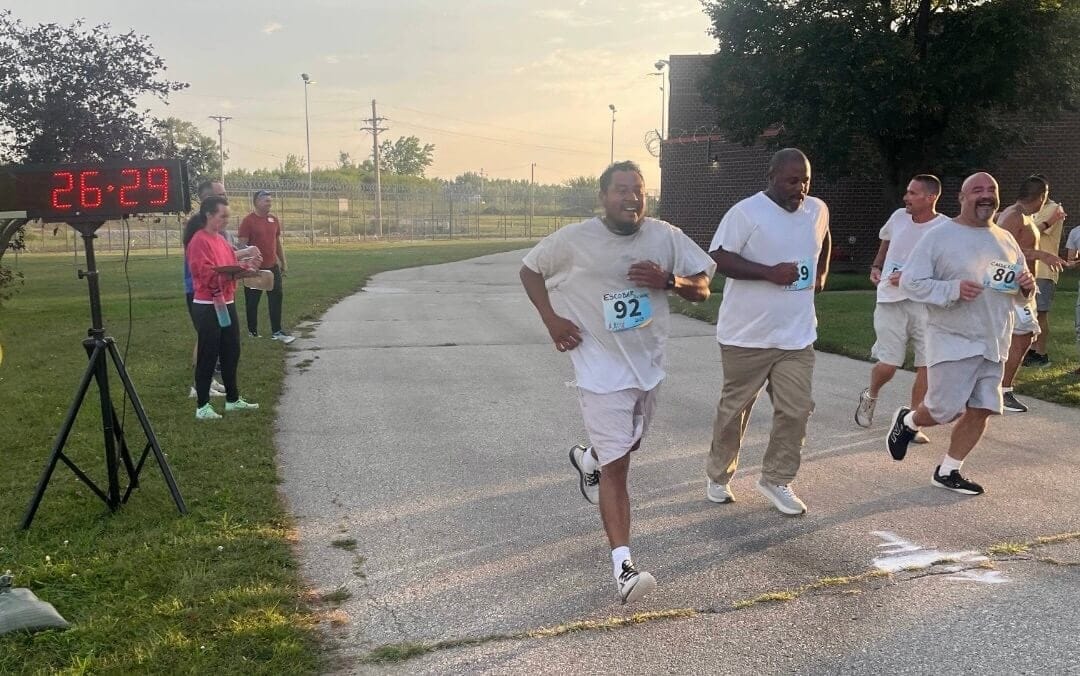
There was a timed start and finish line. Volunteers staffed an aid station with water, sports drinks and gels. People rang cowbells, held signs and cheered. Other volunteers counted laps. Runner coaches paced men through difficult stretches of the race.
For a few hours, it looked and felt like a race anywhere else.
But every finish carried a story.
One runner surprised himself by finishing in under 1 hour, 50 minutes. Another was preparing to enter a work-release program and completed nearly 12 miles, farther than he had ever gone before. A former Olympic 1,500-meter runner completed the longest run of his life. Another runner finished through rain and sleet without stopping and couldn’t wait to tell his family what he had accomplished.
One man had joined the program saying he planned to “just walk.” Over the following six months, he lost weight and eventually spent the entire three-hour race limit moving forward. As he approached the finish, other inmates chanted his name.
One man had joined the program saying he planned to “just walk.” Over the following six months, he lost weight and eventually spent the entire three-hour race limit moving forward. As he approached the finish, other inmates chanted his name.
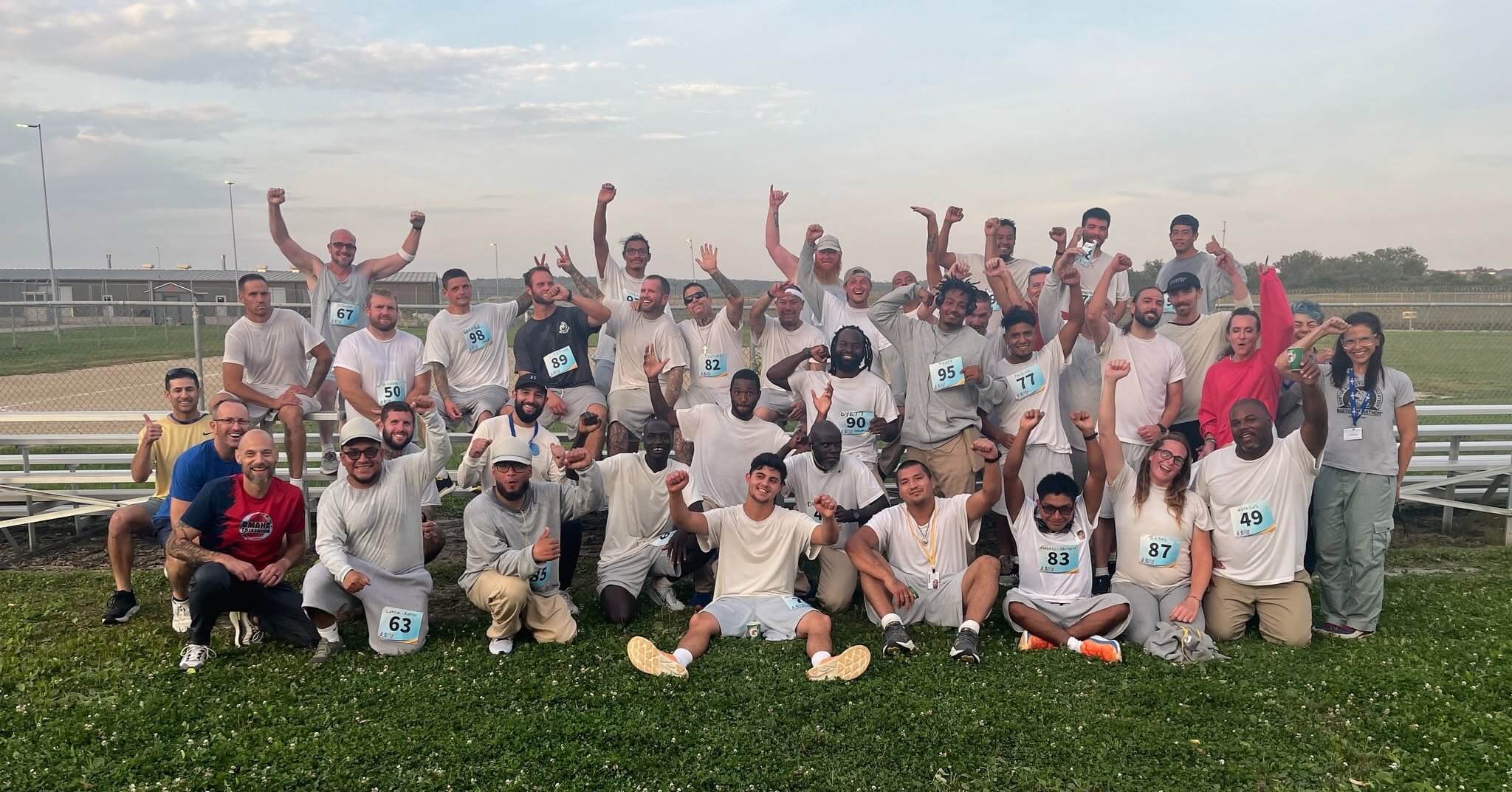
Those final laps became a picture of what OCC Run Crew had hoped running might create: community, discipline, perseverance, hope and a new way for men to see themselves.
And the story was only beginning.
Season Two
After the half marathon, winter arrived.
For nearly five months, the volunteers were separated from the men they had spent so much time training alongside. They wondered whether the discipline developed during the first season would continue.
The answer came when registration opened for Season Two.
Nearly 200 men expressed interest.
Because of staffing, safety and logistical limitations, OCC could not accommodate everyone. Leadership agreed to allow 100 men into the 2026 program, including 23 returning runners from the first season.
The returning runners now had something new to offer: leadership.
They knew the routine. They understood the expectations. They had experienced what could happen when they committed to doing something difficult.
The second season also brought deeper conversations.
After more than a year of running together, trust had formed. Miles gave men opportunities to talk about parole, education, family, uncertainty about the future and faith.
After more than a year of running together, trust had formed. Miles gave men opportunities to talk about parole, education, family, uncertainty about the future and faith.
One participant preparing for release shared that he already had a job lined up and planned to pursue an automotive technology degree. Another longtime participant faced uncertainty about what would happen after his sentence. Another began reading the book of Job after a fellow inmate encouraged him to spend time in Scripture.
The running created space for those conversations to happen naturally—side by side, one mile at a time.
Chasing a Standard
By the summer of 2026, OCC Run Crew introduced another challenge.
The mile.
The volunteers used Roger Bannister’s historic four-minute mile as an illustration. The goal wasn’t for the OCC runners to break four minutes. The point was to have a standard in front of them—to discover what could happen when they pushed beyond what they thought was possible.
Eighty-seven men lined up to race.
Twenty runners from outside the correctional center came in to help coach, organize and encourage them. There was a timing clock, an official start and finish line and the atmosphere of a real race.
The runners were divided into groups based on expected finishing times.
One man ran 5:20. A dozen finished in under seven minutes. Volunteer runners jumped alongside others in the final quarter mile, pushing them to find another gear.
Then the final group raced.
Some had entered the day doubting whether the mile mattered or whether they could run it quickly. But when the starting signal came, they raced.
With fellow runners, volunteers and more than 100 inmates watching, they sprinted toward the clock. Every member of the group finished in under 15 minutes.
The lesson wasn’t about Roger Bannister’s standard.
It was about discovering their own.
Running Toward Something New
OCC Run Crew is a running program.
But it has become about much more than running.
It’s about showing up every Monday.
It’s about learning discipline.
It’s about someone remembering your name.
It’s about a pair of donated shoes that tells someone, “People care about you.”
It’s about setting a goal that seems impossible and discovering that you can go farther than you thought.
And it’s about second chances.
The Christian faith woven throughout the OCC Run Crew points toward the invitation Jesus gives in John 10:10: to have life and have it to the full. Running cannot erase the actions that brought someone to prison, nor the hurt experienced by victims and families. But consequences do not have to eliminate the possibility of transformation.
The hope behind OCC Run Crew is that encouragement, discipline, relationships and faith can help men begin moving toward a different future.
In the first season, runners looked across the prison grounds and could see the Omaha skyline beyond the walls. As they ran, it became a powerful picture.
They were moving forward.
Away from what had been.
Toward what could still be.
One lap at a time.
